

In our everyday life, we all have seen people who face trouble reading distant signboards or people who squint to watch TV clearly. You might have even noticed
you or your loved ones facing the same frustration too? This inability to see distant things clearly, is called ‘Myopia’ or in simpler terms ‘Nearsightedness’.
While we may take it as a minor inconvenience, Myopia is becoming a global eyecare concern. According to WHO, nearly half of the world’s population might become Myopic by the year 2050. Myopia generally begins in childhood and can develop into a sight-threatening eye-disease in future. Myopia in daily life often reduces productivity and social confidence. When left uncorrected, it can increase the risk of serious ocular health issues.
What is Myopia?
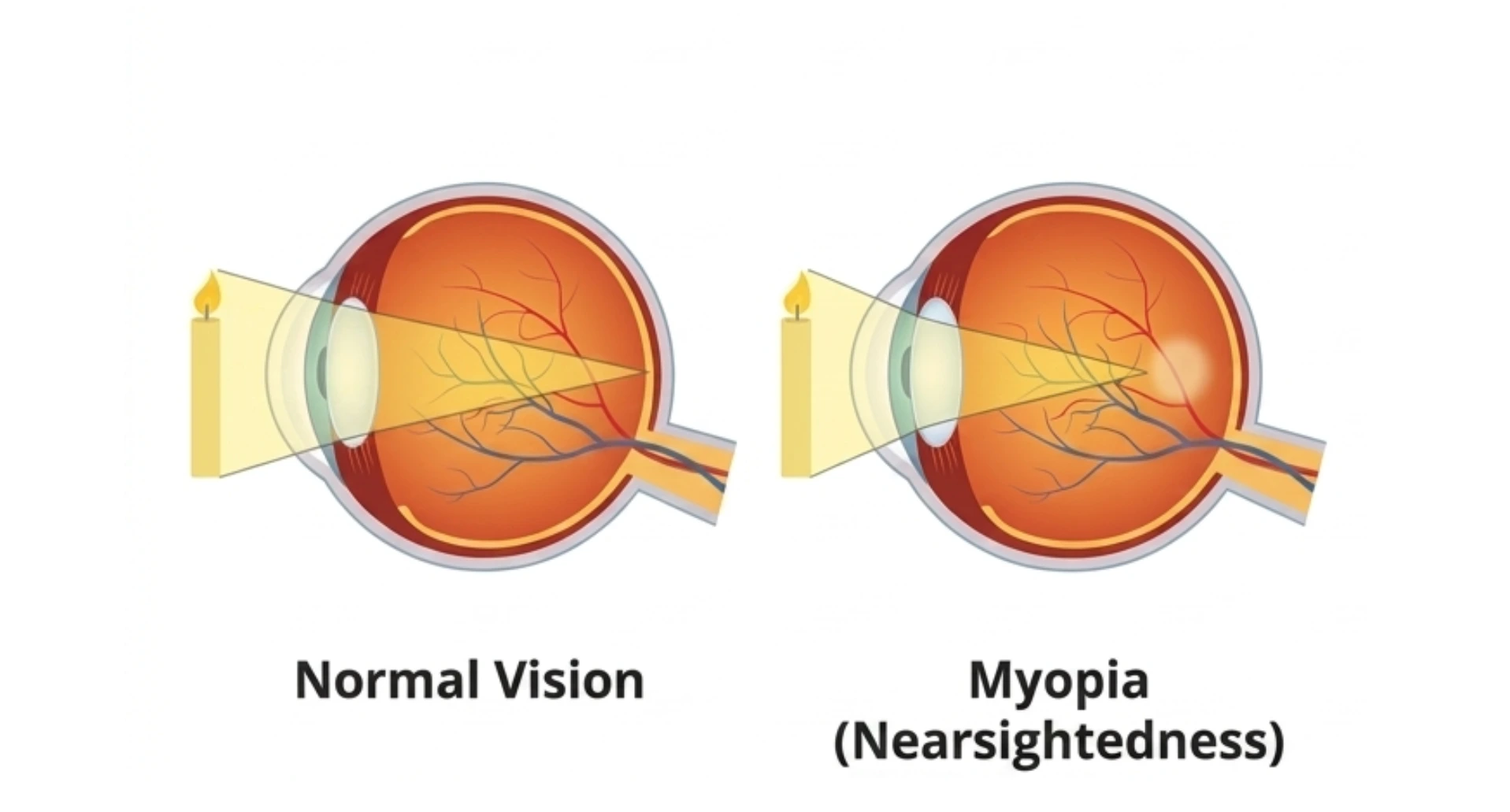
In Myopia, the eyeball grows too long, which causes light to focus in front of the camera, instead of directly on it. This makes distant objects appear blurry. Because it starts developing from childhood, the eye tendon grows in the body, and once it reaches adulthood where the body stops growing, the Myopic eye stops growing too.
In the digital era, where children watch screens for longer time periods, the risk of Myopia increases. The rapid dependence on screens in our everyday life and worklife we forgot that it can have a lasting impact on our vision. Many other factors like genetics and environment can also lead to developing Myopia early.
Types of Myopia
Nearsightedness has different types and all aren’t the same. Understanding which type you or your loved ones helps to take the initial step towards effective management:
Progressive Myopia: Childhood Myopia often worsens over time. It demands frequent prescription changes and can lead to vision-threatening complications like Glaucoma in adulthood.
High Myopia: A more severe form which physically changes the eye structure and increases the risk of complications like retinal detachment, glaucoma, and macular degeneration.
Stable Adult Myopia: This condition often happens in the early 20s, where the eyeball stops growing, and the prescription remains relatively constant.
Who is Affected By Myopia?
Myopia effects are seen in almost everyone regardless of their age. But there are certain age groups which are highly affected than others:
Students and Children: Today every child has a digital device and a load of academic stress, which makes it the breeding ground for ‘Near-work’ strain.
Digital Professionals: Adults who work 8+ hours on their laptop are prone to develop ‘Psuedo-myopia’ – where muscle spasms from over-focusing worsens the situation.
Genetics: If one or both parents have nearsightedness, the chances of children developing the same condition is high.
Myopia’s Effect on Our Daily Life
How we interact with the world on a daily basis can be drastically changed if we have Myopia.
Navigation & Safety: Navigating on roads at night is a high-stress activity. As a Myopic, when we drive, road signs may appear too late to react safely. A glare from incoming vehicle headlights can also cause ‘Night-Myopia’ making distances harder to judge.
Academic & Professional Performance: If a child can’t see what’s written on the blackboard, they eventually lose interest or can fall behind in their studies. In adults, untreated Myopia can lead to eye strain and digital fatigue during an 8-hour workday.
The Hidden Long-Term Risks: Myopia can make your retina thin and without Myopia management, individuals are at the higher risk for:
• Glaucoma: Damaged optic nerve due to increase in fluid pressure.
• Cataracts: Those who have Myopia have higher chances of developing Cataracts early.
Management and Control Strategies
Modern Myopia control strategies are aimed to slow down the eye elongation process with various methods:
The 20-20-20 Rule & Lifestyle Adjustments
A simple exercise with 100% benefits–the 20-20-20 rule, where every 20 minutes, an individual should look at something at least 20 feet away for at least 20 seconds. Encouraging children to spend at least 90 minutes outdoors everyday can naturally slow down Myopia progression.
Advanced Corrective Options
Orthokeratology (Ortho-K): Specially designed to gently reshape the cornea while you sleep, to provide you clear vision during the day without the need for glasses or contacts.
Myopia Control Lenses: Lenses designed to signal the eye to stop growing too long.
Low-Dose Atropine Drops: These drops are designed to slow down the rapid eye elongation with fewer side effects.
Why Trust Infigo For Myopia Care
Managing vision requires more than just a quick power check. At Infigo Eyecare Hospital, we combine clinical expertise with robust diagnostic technology for every Myopic.
Precise Diagnosis: With our advanced German tech, we track the growth of the eye precisely.
Expert Pediatric Care: Our pediatric ophthalmologist ensures that early signs of nearsightedness are caught before they impact a child’s performance.
Safety & Transparency: We ensure that our treatment plan is backed by the latest clinical evidence. We keep parents informed at every stage of their child’s treatment.
Conclusion: See the Future Clearly
Myopia isn’t just a refractive error, it’s a lifestyle challenge that grows with you. Early detection and proactive management can protect your and your loved ones’ sight from complications.
Whether you’re noticing a slight squint or having a screen fatigue, early intervention is the best way to preserve your clear sight.
Let’s take the first step towards a clear vision. Schedule a comprehensive Myopia screening at Infigo.